Vertical vs Diagonal Cracks Subsidence
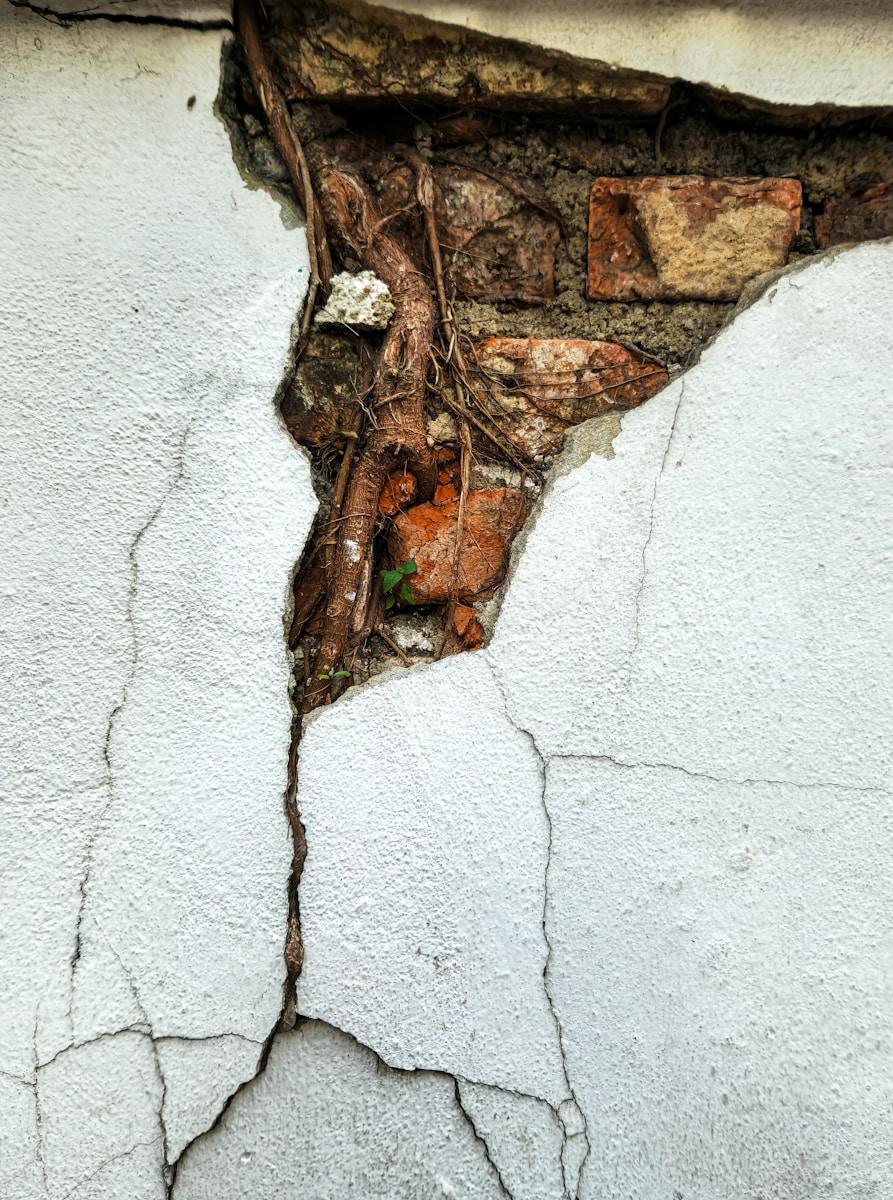
Your walls have cracked. Now you’re trying to determine if you’re looking at harmless settling or serious subsidence. Whether you’re in Preston, Blackpool, or anywhere across Lancashire, understanding crack orientation helps you distinguish between cosmetic annoyance and structural emergency.
The angle makes all the difference.
Vertical Crack Characteristics
Vertical cracks run straight up and down walls. They follow lines of weakness like mortar joints between bricks or joints between different materials. Width typically remains consistent from top to bottom.
These cracks concentrate at stress points. You’ll find them at door frames, window corners, and where walls meet. They appear at the junctions between different building elements that expand and contract at different rates.
Thermal movement creates many vertical cracks. Buildings expand in heat and contract in cold. This movement must occur somewhere. Vertical cracks at weak points accommodate this natural expansion without indicating structural problems.
Vertical cracks rarely indicate subsidence. They represent normal building movement, minor settling, or construction defects. Whilst they might look unsightly, they don’t typically signal foundation failure.
Diagonal Crack Characteristics
Diagonal cracks run at angles through walls. They often follow stepped patterns through mortar joints between bricks, creating that characteristic staircase appearance. The angle typically sits around 45 degrees.
Width varies along diagonal cracks’ length. They start narrow at one end and progressively widen toward the other. This tapering distinguishes them from vertical cracks that maintain consistent width.
Diagonal cracks indicate structural stress. Something has moved or settled unevenly. The building has twisted or one area has dropped whilst another remained stable. This differential movement creates the angled stress pattern.
These cracks strongly suggest subsidence. Particularly when they exceed 5mm width at the widest point, diagonal cracks almost always indicate foundation problems requiring professional assessment.
Width Matters for Both Types
Hairline vertical cracks under 1mm wide rarely cause concern. Fill and redecorate. These surface-level defects don’t indicate structural problems.
Vertical cracks exceeding 5mm width need investigation. At this width, even vertical cracks might indicate serious issues. Check for accompanying symptoms like sticky doors or floor slopes.
Diagonal cracks narrower than 3mm might represent minor historical settling. Monitor them with tell-tales. If they remain static for six months, they’ve probably stabilised.
Diagonal cracks wider than 5mm almost certainly indicate active or recent subsidence. Professional assessment becomes essential at this severity regardless of other symptoms.
Pattern Recognition Across Lancashire
Clay soils throughout Preston and Blackburn create specific crack patterns. Subsidence from clay shrinkage typically produces diagonal cracks starting narrow at ground level and widening upward.
Properties on former mill sites around Burnley might show vertical cracks from settling made ground. These properties can experience both vertical cracks from compression and diagonal cracks if settlement occurs unevenly.
Victorian terraces in Lancaster with shallow foundations show diagonal cracks when subsidence occurs. The shallow depth means foundations move more readily than modern deeper foundations, creating clear diagonal stress patterns.
Coastal properties near Blackpool sometimes show vertical cracks from mortar deterioration. Salt-laden winds erode mortar over decades. Don’t mistake these weathering cracks for subsidence indicators.
Location Tells the Story
Diagonal cracks near ground level point strongly to foundation problems. The issue starts underground and works upward. Cracks appearing low down indicate the foundation area has moved.
Vertical cracks at upper levels often relate to roof spread or lintel failure. These occur above rather than below. The crack location indicates where the problem originates.
Diagonal cracks radiating from one corner suggest that corner has settled. Multiple diagonal cracks converging on a specific area identify the problem location clearly.
Vertical cracks scattered randomly across walls indicate generalised movement. The entire structure is adjusting without specific areas failing more than others.
Internal vs External Correlation
Diagonal cracks appearing both internally and externally in matching positions confirm through-wall structural damage. This affects the masonry itself, not just surface finishes.
Vertical cracks showing only internally might affect plaster alone. Check externally for corresponding cracks. If external walls look perfect, internal vertical cracks probably represent plaster issues.
External diagonal cracks without internal equivalents temporarily might indicate early-stage problems. The outer leaf cracks first. Internal damage follows as movement progresses through wall tie systems.
Testing Crack Activity
Install tell-tales across both vertical and diagonal cracks you’re concerned about. Monitor them identically. This reveals which cracks remain active and which have stabilised.
Tell-tales on vertical cracks often remain intact. These cracks frequently represent historic movement that’s already stopped. Stable vertical cracks need only cosmetic repair.
Tell-tales on diagonal cracks break more frequently. These cracks often indicate ongoing problems. Broken tell-tales on diagonal cracks within six months strongly suggest active subsidence.
Associated Symptoms
Diagonal cracks rarely appear alone. Look for accompanying signs like sticky doors, sloping floors, or gaps between walls and ceilings. Multiple symptoms confirm subsidence.
Vertical cracks often occur independently. A single vertical crack at a door frame without other symptoms probably represents minor settling or thermal movement rather than subsidence.
The symptom constellation matters more than individual signs. Diagonal cracks plus floor slopes plus sticky doors almost certainly indicate subsidence. One vertical crack alone rarely does.
Stress Direction Indicators
Diagonal cracks widening upward suggest the bottom has dropped. Foundation settlement pulls the lower area down whilst upper sections remain supported. This creates the tapered diagonal pattern.
Vertical cracks don’t show directional stress clearly. Their consistent width provides no information about movement direction. They simply indicate stress relief at weak points.
Multiple diagonal cracks forming patterns reveal settlement direction. Cracks radiating from one corner toward others show which area dropped. The pattern maps underground movement.
Repair Urgency Differences
Vertical cracks under 3mm wide can wait for convenient repair timing. Monitor them, but don’t rush expensive investigations. Simple filling when redecorating suffices for most.
Diagonal cracks exceeding 5mm need prompt professional assessment. These indicate potentially serious structural problems. Delays risk worsening damage that becomes more expensive to repair.
Rapidly widening cracks demand immediate action regardless of orientation. If vertical or diagonal cracks grow measurably within weeks, seek urgent engineering advice.
Building Age Influences Interpretation
New builds show vertical cracks during initial settling. These appear in the first two years as materials dry and foundations compress slightly. Most stabilise without intervention.
Victorian properties showing new diagonal cracks indicate fresh problems. These old buildings completed their settling long ago. New diagonal cracks suggest something has changed underground.
Post-war properties might show vertical cracks from construction shortcuts. Some builders cut corners. Vertical cracks from poor workmanship don’t indicate subsidence, just shoddy construction.
Seasonal Effects
Vertical cracks might widen in winter and close in summer. Thermal contraction in cold weather opens cracks. Summer heat closes them partially. This cyclical pattern indicates thermal movement.
Diagonal cracks that widen in summer suggest clay shrinkage. Dry conditions desiccate clay soil. Foundations drop into the resulting voids. This seasonal worsening strongly indicates subsidence.
Monitor both crack types across full annual cycles. One season’s measurements don’t reveal complete behaviour patterns. Summer and winter measurements together show if movement is thermal or subsidence-related.
Professional Assessment Differences
Engineers treat diagonal cracks more seriously. These almost always trigger detailed investigation including foundation inspections and soil testing.
Vertical cracks receive less intense scrutiny unless very wide or rapidly growing. Engineers might recommend monitoring rather than immediate expensive investigation.
Both crack types get measured and photographed during professional surveys. But diagonal cracks drive more urgent recommendations for trial pits, drainage surveys, and underpinning specifications.
Insurance Company Perspectives
Insurers understand diagonal cracks indicate subsidence. Claims featuring diagonal cracks typically proceed to full investigation without argument.
Vertical cracks alone might not trigger subsidence coverage. Insurers might argue these represent maintenance issues or construction defects rather than ground movement.
Document both crack types thoroughly. Photograph them with rulers showing scale. Measure monthly. This evidence supports claims if diagonal cracks appear later or vertical cracks prove related to subsidence.
Cost Implications
Vertical cracks cost little to repair cosmetically. Filling and redecorating runs £100-400 per room professionally. DIY costs even less.
Diagonal cracks indicating subsidence cost thousands to tens of thousands. Underpinning runs £8,000-16,000 for corner treatment. Full perimeter underpinning reaches £30,000-50,000.
The angle literally determines if you’re spending hundreds or tens of thousands. This makes proper diagnosis crucial before committing to repair approaches.
Mixed Crack Patterns
Properties showing both vertical and diagonal cracks might experience multiple problems. Vertical cracks from settling plus diagonal cracks from subsidence create complex patterns.
Diagonal cracks appearing first with vertical cracks following suggest stress is spreading. Initial subsidence creates diagonal cracks. Subsequent stress redistribution opens vertical cracks elsewhere.
Professional assessment becomes essential with mixed patterns. The interaction between different crack types complicates diagnosis. Engineers trained in stress analysis can interpret complex patterns correctly.
Taking Action
Photograph all cracks regardless of orientation. Include scale references. Date images. This documentation proves valuable whether cracks represent cosmetic issues or subsidence.
Measure both vertical and diagonal cracks monthly. Track progression systematically. Patterns emerge over time that single observations miss.
Seek professional assessment for diagonal cracks exceeding 3mm or vertical cracks wider than 5mm. The modest cost of engineering reports prevents expensive mistakes from incorrect self-diagnosis.